
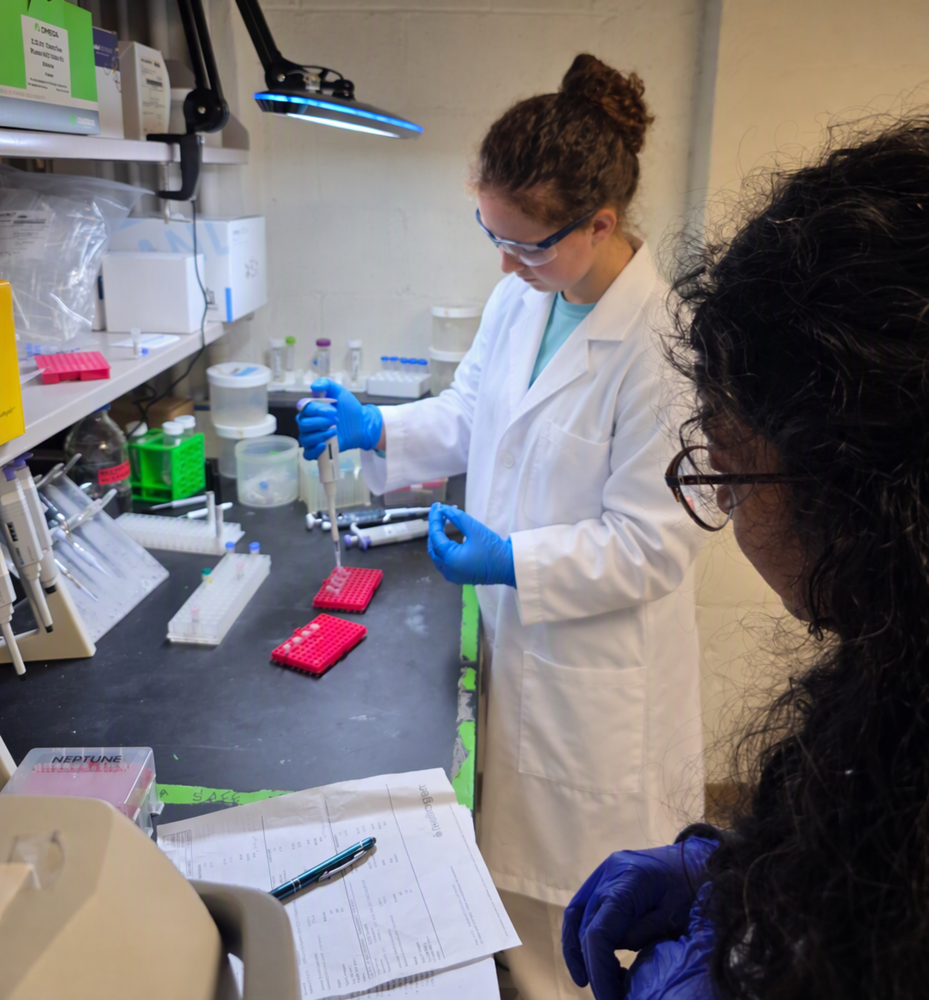
What started as a seventh-grade science project at Sugarloaf School has transformed into advanced genetic research with real-world implications for our oceans. Taylor Thomason, now a student at Key West High School, has partnered with her former Sugarloaf teacher, Alena Ellerbee, to investigate how microplastics and pollution impact marine life, specifically focusing on shrimp. Over the past few years, the depth and scientific scope of this project have grown exponentially.
Through a generous partnership with the biomedical engineering lab at the University of Akron (UA), Thomason gained hands-on access to advanced laboratory facilities and graduate-level mentorship. Working side-by-side with UA graduate students, she learned sophisticated biology techniques to examine how environmental stress affects marine life at the cellular level.
During her time in the lab, Thomason mastered several high-level scientific processes:
• Isolating Genetic Material: Learning how to extract and isolate high-quality RNA—the genetic blueprint—from shrimp tissue.
• Preparing Samples for Analysis: Converting that genetic material into complementary DNA to carefully map out the shrimp's biological response.
• Measuring Pollution Impacts: Running specialized genetic tests (known as qPCR) to accurately measure how the shrimp's genes react to microplastics, showing the exact level of biological stress.
Thomason’s journey highlights what is possible when dedicated teacher-student mentorship pairs with university resources to foster real scientific discovery. She looks forward to presenting her findings and laboratory data to members at Key West High School later this quarter.