
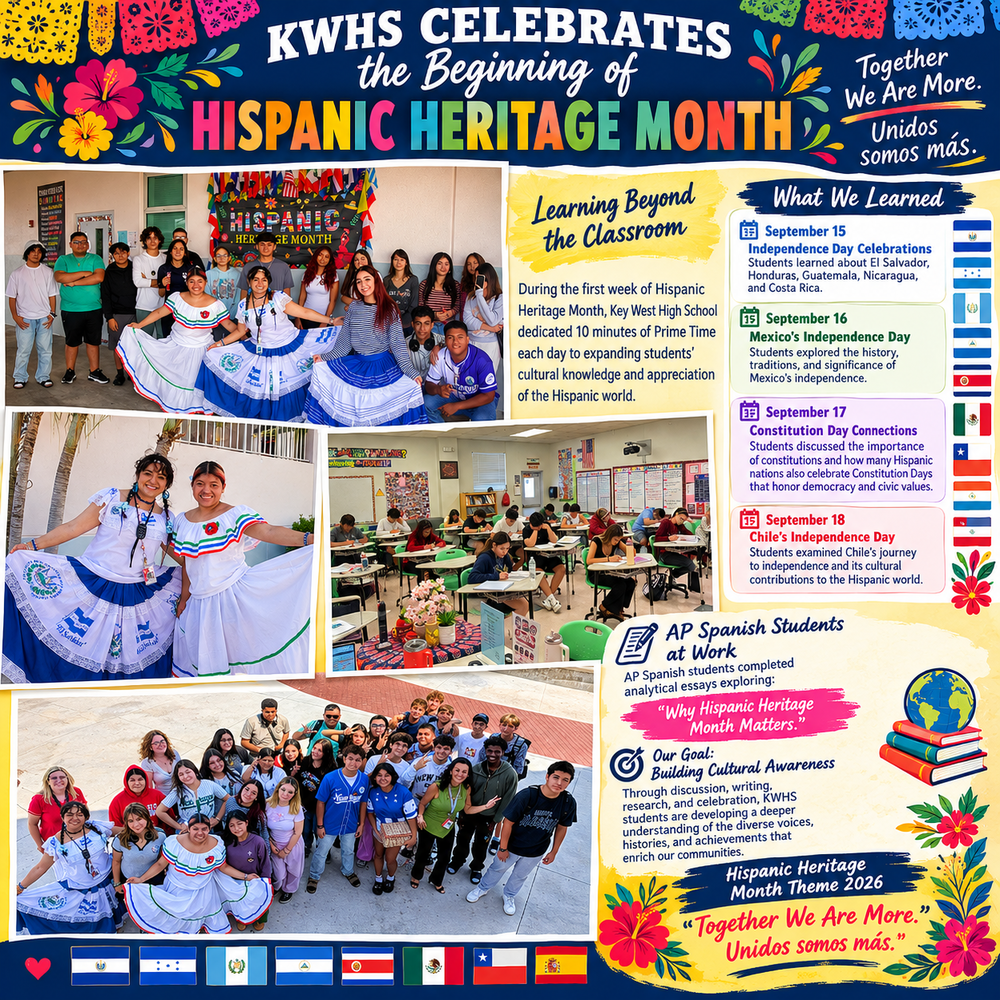
Advanced Spanish classes showcase Hispanic Heritage Month for the student body.
Ms. Castro's classes focused on different countries throughout the month.
Sept 15 - we talked about independence day for 5 countries: El Salvador, Honduras, Guatemala, Nicaragua and Costa Rica
Sept 16 - we talked about Mexico's independence
Sept 17 - we talked about how Hispanic countries also have Constitution days
Sept 18 - Chile's independence day
Advanced Placement (AP) students worked on essays about the importance of Hispanic Heritage Month.
As Hispanic Heritage Month closes on October 15, I wanted to share a brief reflection on the significance of October 12, a date that falls within this important celebration.
Historically, October 12 commemorates the arrival of Christopher Columbus in the Americas in 1492. For many years, countries throughout the Spanish-speaking world observed this date as Día de la Raza (Day of the Race), recognizing the blending of Indigenous and European cultures. Over time, however, many nations have re-examined the meaning of the day and adopted names that encourage a broader and more inclusive understanding of history.
October 12 is known by different names across Latin America, including:
Day of Indigenous Resistance in El Salvador and Venezuela
Decolonization Day in Bolivia
Day of Indigenous, Black, and Popular Resistance in Nicaragua
Day of the Pluricultural Nation in Mexico
Day of Respect for Cultural Diversity in Argentina
Day of Cultures in Costa Rica
Day of Hispanicity in Spain
Regardless of the name used, this date provides an opportunity to recognize and honor the resilience, cultures, traditions, and contributions of Indigenous peoples throughout the Americas. Indigenous communities are not only part of our history; they remain vibrant and essential contributors to our societies today. Their languages, knowledge, customs, and values continue to shape our shared heritage.